 EN
EN


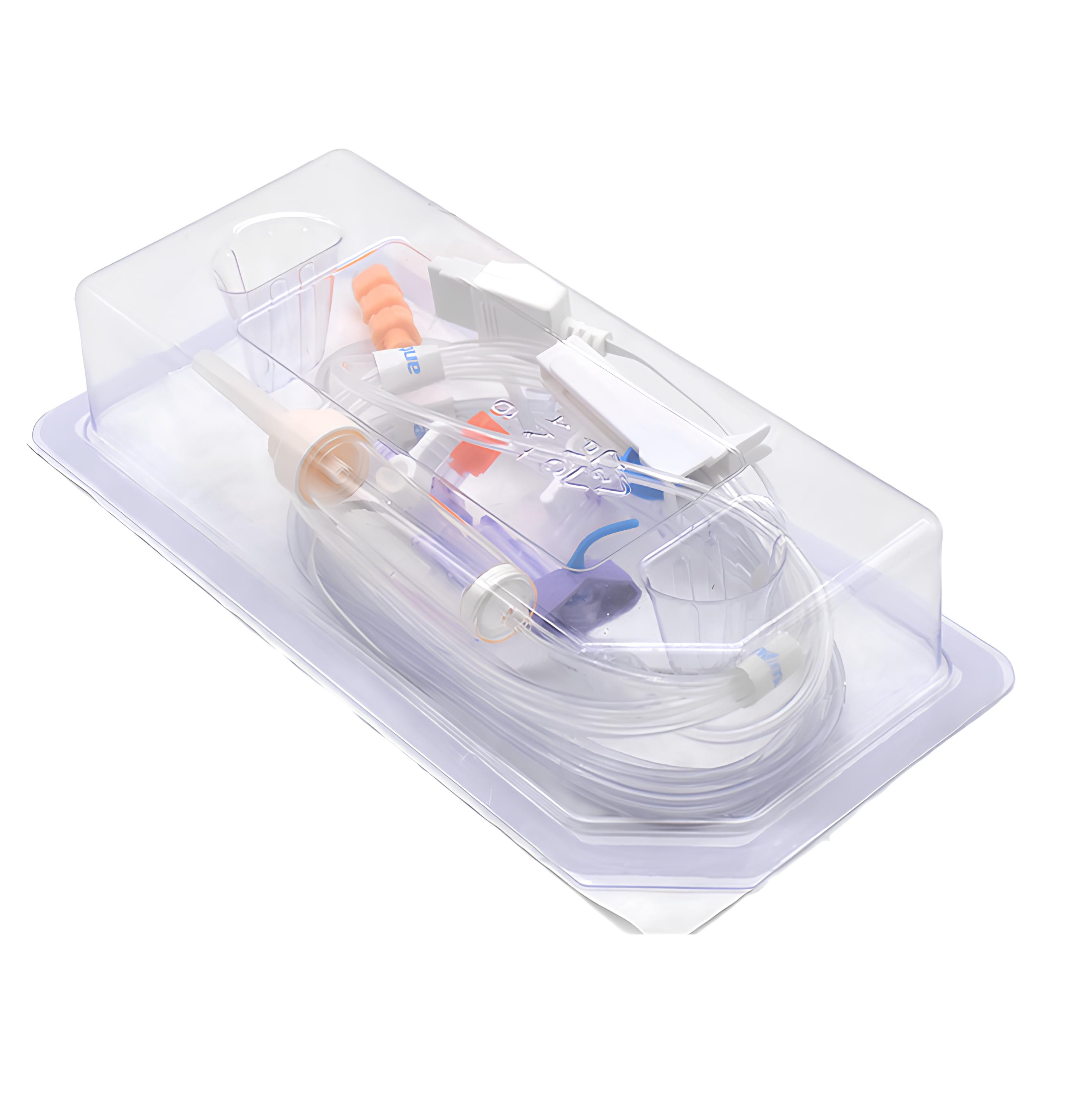
Core Working Principles of IBP Transducers
How IBP Transducers Convert Physiological Pressure into Electrical Signals
Intra-arterial blood pressure (IBP) transducers work by connecting directly to the blood vessels through a fluid link between the vascular system and a special pressure sensing membrane. When blood pressure goes up and down, this causes the membrane to bend back and forth in proportion to those changes, turning the physical movement into an electrical signal. Today's equipment typically incorporates these tiny MEMS strain gauges attached right onto the diaphragm surface. These little sensors actually change shape when there are pressure variations. The way they reshape themselves affects how much electricity flows through them, creating what we can measure as voltage differences. Some of the newer MEMS models respond incredibly fast, sometimes within just three milliseconds or so. This speed matters a lot in emergency situations where doctors need to track sudden changes in blood flow dynamics during critical care scenarios like shock treatment.
The Role of Strain Gauges and Wheatstone Bridge in IBP Transducer Function
Strain gauges act as main sensors that convert the movement of a diaphragm into measurable changes in electrical resistance. When set up in what's called a Wheatstone bridge circuit, there are typically four strain gauges working together at once. Two of them get compressed while the other two stretch out when pressure levels change, which helps pick up even small differences in measurement. The whole setup makes for better signal quality too, cutting down background noise by somewhere between 40 to 60 percent compared to just using one sensor alone. Plus it stays pretty linear with only about plus or minus 1% variation throughout normal clinical pressures from zero all the way up to 300 mmHg. That means doctors can trust the numbers they get for both systolic and diastolic blood pressure measurements without worrying too much about inaccuracies messing things up.
Zeroing, Leveling, and Calibration: Ensuring Baseline Accuracy in IBP Monitoring
Getting accurate IBP measurements means setting the transducer against atmospheric pressure through proper zeroing and positioning along the patient's phlebostatic axis. Research published in Biomedical Instrumentation & Technology back in 2022 showed that when equipment isn't level properly, error rates can reach around 7.2 mmHg, which might hide early warning signs of conditions like septic shock. Clinicians should remember to perform zeroing procedures right after inserting the catheter, whenever patients change positions, and roughly every four to six hours for long term monitoring sessions. These steps help keep readings consistent and reliable throughout treatment periods.
Dynamic Response Characteristics: Natural Frequency and Damping Effects
For accurate waveforms, the transducer system needs just the right natural frequency, usually between 10 and 24 Hz, along with a good damping coefficient around 0.6 to 0.7. When systems aren't damped enough, they tend to overshoot those pressure peaks, but if there's too much damping, important waveform details get lost. A study from the Journal of Clinical Monitoring last year found something interesting: when damping coefficients were set at about 0.64 plus or minus 0.05, this cut down on systolic overshoot by nearly two thirds without messing up diastolic readings. Getting these numbers right matters a lot for spotting conditions like pulsus paradoxus or certain heart rhythm problems.
Accuracy Determinants in Clinical Use of IBP Transducers
Defining Accuracy in Invasive Blood Pressure (IBP) Monitoring
When it comes to blood pressure monitoring accuracy, we're talking about keeping measurements within 5 mmHg of actual arterial pressure. This level of precision requires correct calibration against atmospheric pressure conditions. While automated systems do cut down on mistakes made by people, improper calibration still causes nearly one out of five measurement problems according to Critical Care Metrics from last year. Another common issue? Those pesky air bubbles getting into the transducer lines. These bubbles create damping effects that mess with readings, sometimes changing systolic and diastolic numbers by as much as 12 mmHg when dealing with patients who have low blood pressure.
Impact of Transducer Misalignment and Improper Leveling on Readings
When the transducer moves more than 5 centimeters away from the right atrium position, it creates these hydrostatic pressure errors that lead to misleading gradient readings. Looking at data from multiple intensive care units, researchers found something alarming: nearly a quarter (about 23%) of all arterial line setups were improperly leveled. And this wasn't just a minor issue either. The study showed that in most instances (around 63%), blood pressure measurements came out artificially high because of this problem. Things get even worse when patients need to be moved around. If the equipment stays misaligned during repositioning, it accounts for roughly 14% of unnecessary vasopressor doses given to people in shock situations according to findings published in the Journal of Hemodynamic Monitoring back in 2022.
Case Study: Hypotension Misdiagnosis Due to Uncalibrated IBP Transducers in ICU
Looking at records from 412 ICU patients in 2023, researchers found 18 instances where improperly calibrated blood pressure transducers caused doctors to miss low blood pressure readings. This mistake postponed starting vasopressors by about 47 minutes on average. Take one specific case: a 65 year old patient battling sepsis had their radial artery catheter reading drop 22 mmHg below what was actually happening because someone forgot to properly zero the device. When medical staff relied on this wrong information, they delayed adjusting norepinephrine levels, which added roughly three and a half extra days to the patient's ICU stay. These kinds of errors really underscore why hospitals need regular checks on these pressure monitoring devices, especially for critically ill patients who can't afford any delays in treatment.
External Validation Studies on IBP Transducer Accuracy in Ventilated Patients
Mechanical ventilation introduces pressure swings that challenge IBP accuracy, especially in ARDS patients on high PEEP. A meta-analysis of nine validation studies found 7.4±2.1 mmHg discrepancies between femoral and radial IBP measurements during ventilation. Advanced systems with automatic compensation algorithms reduced signal drift by 82% compared to legacy devices (Respiratory Care 2023).
IBP vs. Non-Invasive Blood Pressure (NIBP): When Precision Matters
Physiological Lag and Waveform Fidelity: Advantages of IBP in Shock States
When dealing with fast changing blood pressure situations, invasive blood pressure monitoring delivers live waveform data within about 1.5 seconds, which is actually around 200 milliseconds quicker than what we get from non-invasive techniques. Looking at specific cases helps illustrate this point better. A recent study from 2023 showed something interesting: when patients have low blood pressure below 90 mmHg systolic, standard non-invasive measurements tend to read too high by roughly 18 mmHg. But flip that scenario and look at someone experiencing a hypertensive crisis where systolic readings go above 160 mmHg, those same devices start reading too low instead, missing the mark by about 22 mmHg. What makes invasive monitoring so valuable is its ability to capture well over 240 different characteristics from each pulse wave every single minute. This detailed information lets clinicians spot signs of dropping heart function much sooner than traditional oscillometric blood pressure cuffs ever could.
Discrepancies Between IBP and NIBP During Vasoactive Therapy
Studies looking at catheterization have found that when patients receive vasoactive medications, there can be significant differences in blood pressure readings, sometimes over 25 mmHg apart, and this happens in nearly 4 out of 10 ICU patients. The problem gets worse with norepinephrine treatments because it causes blood vessels in the extremities to constrict, making standard blood pressure cuffs unreliable. These cuffs tend to show lower numbers than what's actually happening in the arteries. When doctors need to adjust vasopressors carefully, invasive blood pressure monitoring stays much more accurate, staying within about 2 mmHg of real values while automatic cuffs can be off by as much as 15 mmHg. Recent trials from 2024 confirm these findings, highlighting why many critical care units prefer direct arterial measurements during these delicate adjustments.
Meta-Analysis Insights: Mean Arterial Pressure Differences in Postoperative Care
Aggregated data from 47 studies (n=9,102 patients) shows IBP detects clinically significant MAP drops (<65 mmHg) 12 minutes earlier than NIBP in postoperative settings. This early warning correlates with a 23% reduction in acute kidney injury and 19% lower vasopressor use. Evidence supports IBP superiority in patients with:
- BMI >35 (42% larger NIBP discrepancies)
- Mechanical ventilation (28% higher waveform artifacts with NIBP)
- Prolonged surgeries (>4 hours) involving major fluid shifts
Clinical Practices That Influence IBP Transducer Performance
Arterial catheterization site impact on IBP accuracy: Radial vs. femoral
Studies show that radial artery catheters tend to measure about 8 to 12 percent higher systolic pressure readings compared to those taken at the femoral site in patients on ventilation according to research published in Critical Care Medicine last year. There are also distinct differences in how the waveforms look, which can make interpreting pulse pressure tricky sometimes. On the flip side, when dealing with vasoplegic shock situations, doctors often find that femoral access gives a truer picture of what's happening in the central aorta. But there's a catch here too. The femoral approach comes with significantly greater risk of infections, so healthcare providers have to weigh the benefits of more accurate measurements against the potential complications that might arise from using this method.
Flushing system compliance and its effect on signal damping and resonance
Non-compliant tubing causes excessive resonance, distorting waveforms. Systems with low damping coefficients (<0.3) may overestimate systolic pressure by 15–23 mmHg. Maintaining optimal flush rates (3 mL/hr) and using rigid transducer materials helps preserve a natural frequency of 40–60 Hz, crucial for capturing rapid pressure changes accurately.
Nursing protocols and adherence in maintaining reliable IBP transducer output
Hourly zero-reference checks reduce measurement drift by 78% compared to 4-hour intervals (Journal of Nursing Quality 2024). Standardizing nursing protocols across shifts decreases improper leveling errors from 43% to 9% in ICUs, directly improving decision-making for fluid resuscitation and vasopressor management.
Emerging Innovations in IBP Transducer Technology
Integration of Digital Signal Processing for Enhanced Waveform Clarity
Today's invasive blood pressure transducers make use of digital signal processing, or DSP for short, which helps clean up those annoying motion artifacts and electrical noise as they happen. Traditional analog systems had these set bandwidths that couldn't change, but DSP works differently. These smart algorithms actually adjust themselves based on what each specific patient's waveform looks like. They keep important details such as those little dips called dicrotic notches intact while knocking out unwanted signals. Some recent research looking at this stuff back in 2023 indicated that clinicians get clearer waveforms about 40 percent better when working with ventilated patients. And clearer readings mean fewer chances of making mistakes when interpreting what's going on inside the body.
Wireless Telemetry and Real-Time Drift Detection in Modern IBP Systems
Next-generation transducers incorporate Bluetooth 5.0 telemetry, enabling continuous pressure transmission across hospital networks without cable-related degradation. Embedded circuits detect baseline drift exceeding ±2 mmHg and alert clinicians via integrated monitoring platforms. Trials indicate wireless systems reduce catheter-related complications by 18% by minimizing physical handling at the bedside.
Smart Algorithms Compensating for Hydrostatic Pressure Setup Errors
Advanced IBP systems now integrate MEMS-based tilt sensors and machine learning to automatically correct for transducer misleveling. When tested against manual zeroing, these systems achieved 98% correction accuracy for height discrepancies up to 20 cm. Clinical validations in 2024 demonstrated a 22% reduction in hydrostatic error-related inaccuracies during routine patient repositioning.
FAQs
What is an IBP transducer?
An IBP (Intra-Arterial Blood Pressure) transducer is a medical device that measures blood pressure within the arteries by converting physiological pressure into electrical signals.
How do MEMS strain gauges work in IBP transducers?
MEMS strain gauges are tiny sensors attached to the diaphragm of the IBP transducer. They change shape when pressure variations occur, affecting the flow of electricity and generating measurable voltage differences.
Why is proper zeroing important for IBP monitoring?
Proper zeroing ensures that IBP measurements are accurate by setting the transducer against atmospheric pressure, preventing errors that can hide critical conditions such as septic shock.
What are the advantages of IBP over NIBP in critical care settings?
IBP provides real-time waveform data crucial for tracking sudden changes in blood pressure, delivering more precise measurements than NIBP, especially during vasoactive therapy.
How does digital signal processing enhance IBP transducers?
Digital Signal Processing (DSP) improves waveform clarity, reducing motion artifacts and electrical noise, thereby enhancing the accuracy of blood pressure measurements.
Table of Contents
-
Core Working Principles of IBP Transducers
- How IBP Transducers Convert Physiological Pressure into Electrical Signals
- The Role of Strain Gauges and Wheatstone Bridge in IBP Transducer Function
- Zeroing, Leveling, and Calibration: Ensuring Baseline Accuracy in IBP Monitoring
- Dynamic Response Characteristics: Natural Frequency and Damping Effects
- Accuracy Determinants in Clinical Use of IBP Transducers
- IBP vs. Non-Invasive Blood Pressure (NIBP): When Precision Matters
- Clinical Practices That Influence IBP Transducer Performance
- Emerging Innovations in IBP Transducer Technology
- FAQs