 EN
EN


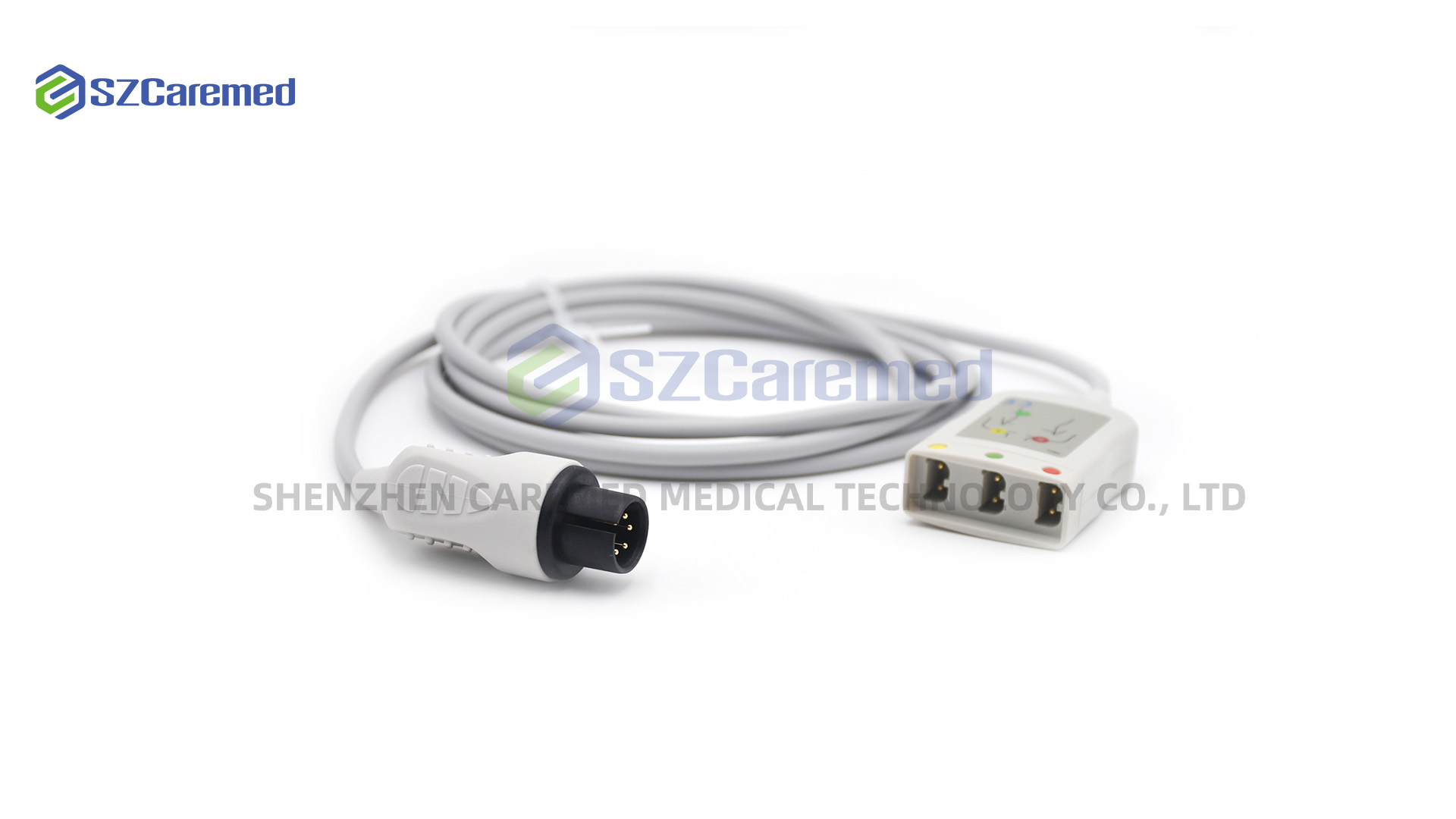
How ECG Cable Quality Impacts Signal Accuracy and Diagnostic Reliability
The Role of ECG Cable Design in Minimizing Signal Distortion
Twisted conductor geometry in high-performance ECG cables reduces crosstalk by 60% compared to flat designs (Cardiovascular Engineering Journal, 2022), ensuring precise waveform reproduction. Medical-grade insulation materials like thermoplastic elastomers suppress electrostatic interference, while strain-relief connectors prevent intermittent signal loss during patient movement.
Reducing Noise and Artifacts with High-Fidelity ECG Cables
Shielded ECG cables with triple-layer aluminum-mylar barriers block 92% of electromagnetic interference from MRI machines and defibrillators. Advanced filtering algorithms in hospital-grade cables suppress 50/60 Hz power line noise, reducing diagnostic errors from baseline wander by 41% (Clinical Electrophysiology Review, 2023).
Real-World Consequences: Case Study on Misdiagnosis Due to Poor Cable Performance
A 2019 study of 2,300 emergency room ECGs found that degraded cable shielding directly caused 12% of ST-segment misinterpretations, leading to unnecessary thrombolytic therapy in 18 patients. One documented case involved a 54-year-old male whose noise-corrupted ECG nearly delayed critical PCI intervention due to false STEMI indications.
The Growing Importance of Reliable ECG Signal Transmission in Modern Diagnostics
With 73% of hospitals now using centralized cardiac monitoring systems (American College of Cardiology, 2023), clinics require cables maintaining <5 μV peak-to-peak noise across 300+ daily connections. The rise of tele-ECG platforms amplifies this need—low-impedance connectors and oxygen-free copper conductors prevent signal attenuation during remote transmissions.
Electromagnetic Interference and Shielding: Safeguarding ECG Signal Integrity
Common Sources of Interference in Clinical Environments Affecting ECG Cables
Modern hospitals generate 40–100 times more electromagnetic noise than residential settings (IEEE 2022). MRI scanners, wireless infusion pumps, and fluorescent lighting account for 74% of ECG signal distortions in cardiac care units. Even smartphones degrade unshielded cables by generating 2.4–5 GHz radiofrequency interference (RFI) within 3 meters.
How Effective Shielding in ECG Cables Prevents Signal Degradation
The best ECG cables on the market today feature dual layer shielding that combines braided copper with around 90% coverage plus aluminum foil, which together manage to block roughly 98% of outside electrical interference. Studies conducted in real clinical settings have found that this kind of shielding cuts down baseline wander issues by about two thirds and reduces those pesky muscle artifacts by nearly half when compared to standard cables. What really makes a difference though is when these shielded cables work with conductive hydrogel electrodes. Under normal patient movement conditions, they keep noise levels below 5 microvolts, something that actually meets the latest ANSI/AAMI EC13:2023 requirements for getting accurate diagnostic readings. This level of performance matters because it means doctors can trust what they see on screen even when patients aren't completely still during tests.
Shielded vs. Unshielded ECG Cables: A Performance Comparison
| Metric | Shielded ECG Cables | Unshielded ECG Cables |
|---|---|---|
| Noise suppression | 85–90 dB attenuation | 15–20 dB attenuation |
| Critical care usability | Suitable for MRI/ICU | Restricted to low-noise areas |
| Average lifespan | 18–24 months | 8–12 months |
| Motion artifact rate | 2.1 events/hour | 9.8 events/hour |
A 2023 study in Cardiovascular Engineering found shielded cables delivered 92% diagnostic accuracy during emergency transport versus 67% with unshielded models. Hospitals using shielded ECG systems report 43% fewer repeat stress tests due to improved signal clarity.
Material Durability and Patient Comfort: Designing Clinically Effective ECG Cables
High-Quality Materials That Enhance ECG Cable Longevity and Safety
ECG cables today need materials strong enough for hospital environments yet still maintain clear signals. Most medical grade cables are made from thermoplastic polyurethane or TPU for short. Why? Because this stuff holds up against constant wear and tear, survives exposure to harsh cleaning chemicals, and can bend back and forth without breaking down after weeks of being sterilized up to twelve times each week according to recent industry data. For kids or patients needing long term monitoring, silicone options offer better flexibility which helps avoid those painful pressure sores we all want to prevent. Smart cable makers know their stuff when it comes to construction details too. They often put in double shielded copper wiring inside the outer covering. This design choice actually stops wires from wearing out over time something that happens way too often with cheaper cables on the market right now.
Improving Patient Experience With Flexible, Lightweight ECG Lead Wires
Rigid cables tend to cause discomfort when patients need long term monitoring, and they actually create about 27% more movement artifacts according to those ambulatory studies published in the Journal of Cardiac Monitoring back in 2023. The newer designs with their tapered wires ranging from around 1.8 to 2.2 millimeters thick plus some clever microfilament weaving techniques have cut down on cable weight by roughly 40 percent. What does this mean practically? Patients can move their torsos more naturally without worrying about electrodes popping loose, which is really important during stress testing sessions or for folks who just don't have much mobility to begin with. Doctors working with these flexible cables notice something interesting too there seems to be about a third fewer times they need to stop and adjust everything mid procedure, so less interruption to their workflow overall.
Balancing Durability With Comfort in High-Use Clinical Settings
Good ECG cable design needs to balance toughness against comfort when worn. These cables have special reinforced areas around them called strain relief collars that can handle way more than 50 thousand times plugging and unplugging before breaking inside. They still stay flexible enough so patients don't feel uncomfortable during monitoring. Some cables now use antimicrobial silicone mixtures which help fight off germs but remain soft on skin contact. Hospitals report seeing about 19 percent less replacement cables each year after switching to these new materials, which makes sense given how busy ERs get day after day with constant patient turnover.
Cable Design and Lead Positioning: Ensuring Consistent Signal Reliability
How ECG Lead Placement Affects Waveform Accuracy
Precise lead placement is essential for reliable cardiac waveform data. Electrode misplacement by just 2 cm can alter QRS morphology, potentially obscuring ischemic changes or exaggerating ST-segment deviations. Clinicians following the International Society of Holter and Noninvasive Electrocardiology’s 2023 guidelines report 41% fewer diagnostic ambiguities compared to inconsistent placement methods.
Impact of Cable Stiffness and Connector Alignment on Electrode Stability
Today's ECG cables are moving toward silicone materials because they offer just the right mix of flexibility and signal quality. The cables can bend almost completely around (about 180 degrees) without losing their function. According to research published in the Clinical Engineering Journal last year, when cables have those angled connectors, they actually cut down on lead tension by nearly 60% as patients move around. And let's not forget about those gold plated contacts either. They keep the electrical resistance under 3 kiloohms even after being connected and disconnected over ten thousand times. Why does this matter? Well, during stress tests especially, these small improvements make a big difference. Most of the random signal problems we see happen because of tiny movements in the cables themselves, accounting for roughly two thirds of all such issues according to the same study.
Market Trends and Technological Advancements in ECG Cable Development
Innovations in Smart Shielding, Digital Filtering, and Wireless ECG Cables
Modern ECG systems now integrate smart shielding to block interference from MRI machines and defibrillators. Digital filtering algorithms suppress motion artifacts, improving waveform clarity by up to 40% in ambulatory settings. Wireless ECG cables using Bluetooth 5.2 enable untethered monitoring in telemetry units while maintaining diagnostic-grade accuracy.
Rising Demand in Telemedicine and Home Monitoring Driving ECG Cable Innovation
Market analysts expect the worldwide ECG cable business to expand at around 6.7 percent each year until 2031 mainly because more people are turning to telehealth services while older adults need heart monitoring at home. Companies making these cables have started focusing on lighter weight models that don't get tangled, especially those working well with patch type wearables and basic Holter devices consumers can use themselves. Doctors who work remotely tell us there's about a quarter reduction in wrong alarms from patients at home when they switch to cables built with extra strong connection points and electrodes that stay attached without snapping off during normal movement.
Cost vs. Performance: Challenges in Scaling Next-Generation ECG Cables
Using antimicrobial coatings along with oxygen free copper wiring definitely makes things last longer and gives better signal quality, though it does push production costs up somewhere between 18 to 22 percent compared to regular PVC cables. A lot of developers are now looking at mixing things up a bit, creating products where the parts that touch patients can be thrown away after use while keeping the main unit intact multiple times. This approach tries to strike a balance between preventing infections and keeping prices reasonable. There's still quite a hurdle when it comes to getting regulatory approval for wireless systems though. These systems need to show they work reliably on both 5G and Wi-Fi networks without any drop in signal strength or compromising data protection standards.
Frequently Asked Questions:
What are the benefits of using shielded ECG cables?
Shielded ECG cables offer better noise suppression, suitable for critical care environments, improved diagnostic accuracy, and longer lifespan compared to unshielded cables.
Why is cable material important in ECG diagnostics?
Cable material impacts durability, signal clarity, and patient comfort. High-quality materials like TPU and silicone improve performance while reducing discomfort.
How does lead placement affect ECG accuracy?
Incorrect lead placement can significantly alter ECG waveform accuracy, potentially leading to diagnostic errors. Proper placement minimizes ambiguities.
What technological advancements are shaping ECG cable development?
Innovations in smart shielding, digital filtering, and wireless capabilities are improving ECG signal clarity, flexibility, and remote monitoring accuracy.
Table of Contents
- How ECG Cable Quality Impacts Signal Accuracy and Diagnostic Reliability
- Electromagnetic Interference and Shielding: Safeguarding ECG Signal Integrity
- Material Durability and Patient Comfort: Designing Clinically Effective ECG Cables
- Cable Design and Lead Positioning: Ensuring Consistent Signal Reliability
- Market Trends and Technological Advancements in ECG Cable Development
- Frequently Asked Questions: