 EN
EN


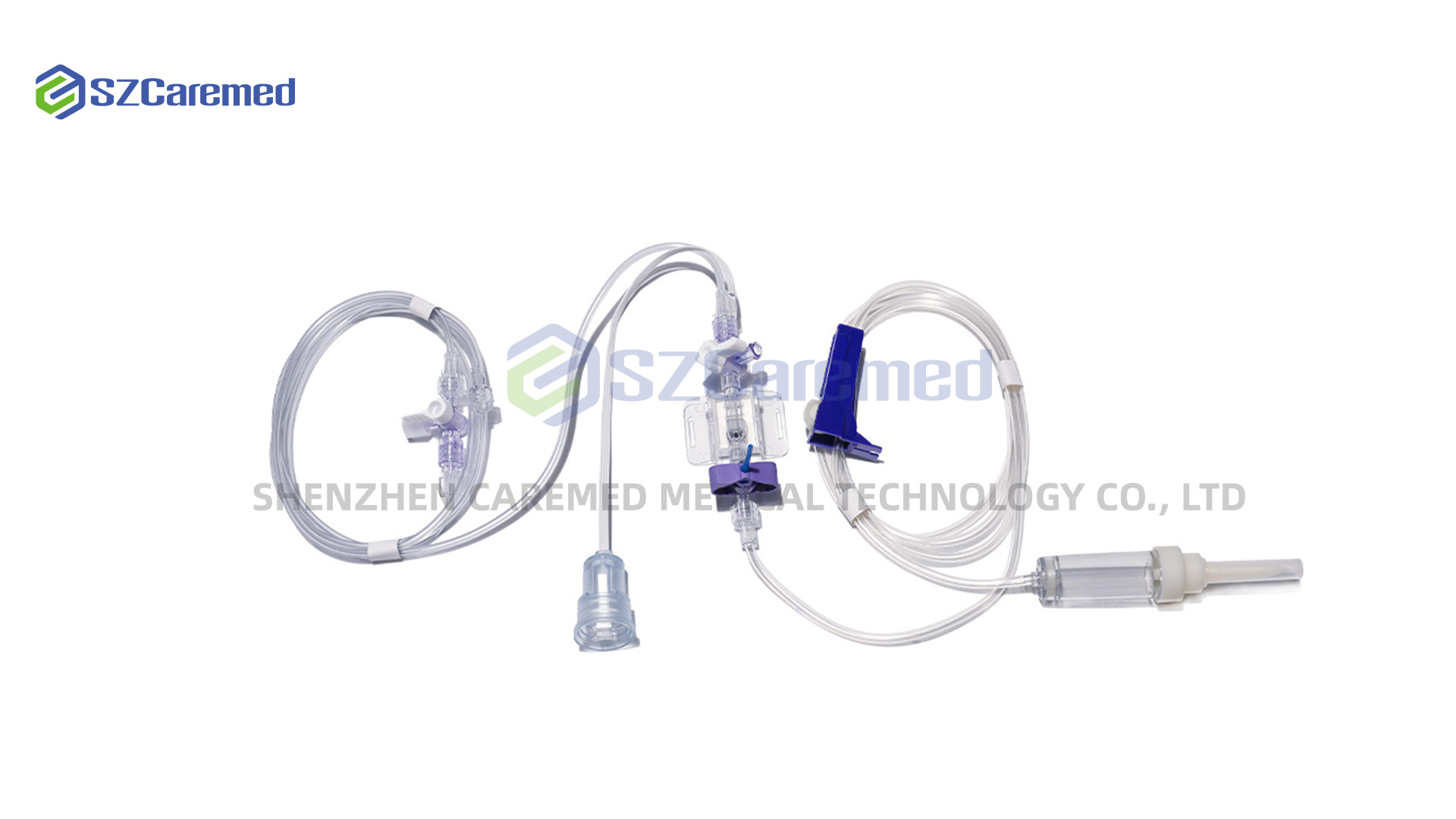
The Science Behind IBP Transducer Accuracy in Invasive Blood Pressure Monitoring
Principle of Invasive Blood Pressure (IBP) Monitoring and Signal Conversion
Intravascular blood pressure (IBP) transducers work by turning the hydraulic signals coming from those catheters that stay inside the body into electrical waveforms we can actually read. The system typically uses a catheter filled with 0.9% saline solution to send those pulsating blood pressure readings to what's called a diaphragm. Here's where it gets interesting - strain gauges pick up these tiny deformations, sometimes as small as just 0.1 micrometers. When this happens, it creates very small voltage signals measured in millivolts. These signals then go through amplification and filtering processes to get rid of unwanted noise caused when patients move around or when ventilators kick in. According to recent findings published in the 2024 Clinical Monitoring Study, measuring arterial pressure directly gives us hemodynamic data accurate within plus or minus 1 mmHg across sampling rates between 100 and 200 Hz. This kind of precision matters a lot because it lets clinicians catch those fast pressure shifts happening during heart-related emergencies.
Key Design Features That Enable High-Fidelity Physiological Signal Capture
Modern IBP transducers incorporate three core technologies to ensure precision:
- MEMS-based sensors with 0.05% non-linearity for stable baseline performance
- Temperature-compensated circuits maintaining ±0.5% accuracy across 15–40°C
- Digital signal processing algorithms suppressing 85–90% of high-frequency noise
Together, these features enable detection of pressure fluctuations as small as 2–3 mmHg—clinically significant differences between normotension and early hypotension.
Role of Diaphragm Sensitivity and Material Selection in Measurement Precision
Transducer diaphragms made from ultrathin titanium (8–12 μm) offer 30% higher strain sensitivity than stainless steel. Hydrophilic polymer coatings reduce thrombus adhesion by 72% (Ponemon 2023), minimizing occlusion-related signal damping. Advanced composite materials limit baseline drift to <0.1 mmHg/hour over 24 hours, ensuring waveform fidelity during prolonged ICU monitoring.
Critical Clinical and Environmental Factors Affecting IBP Measurement Precision
Impact of Catheter Positioning and Hemodynamic Variability on Readings
Getting the catheter positioned correctly matters a lot when it comes to getting trustworthy measurements. When the catheter isn't aligned properly along the mid axillary line, this can lead to measurement errors as high as 23 mmHg, which represents about a 17% deviation from actual values during pulmonary artery pressure monitoring. Things get even trickier when dealing with patients who have hemodynamic instability caused by conditions like arrhythmias or valvular disease. These situations make accurate readings harder to obtain. The equipment needs to respond dynamically within certain parameters too. Transducer systems must stay within plus or minus 2% accuracy across frequencies ranging from 0.15 to 40 Hz so they can actually capture what's happening physiologically in real time rather than just giving misleading data points.
Air Bubbles, Damping, and Signal Distortion in the Pressure Monitoring Line
| Factor | Impact on Signal | Mitigation Strategy |
|---|---|---|
| Air bubbles >0.2 mL | 50% amplitude damping | Pre-flush lines with heparinized saline |
| Kinked tubing | 30–70% waveform distortion | Use rigid, single-loop tubing layouts |
| Particulate matter | False hypertension spikes | Install 40μm in-line filters |
Recent clinical guidelines emphasize zeroing the transducer at the transducer level after eliminating air and particulates to restore baseline accuracy.
Patient Movement and Noise Interference in Real-Time Monitoring
Sudden patient movement can generate artifactual pressure changes of 8–15 mmHg due to line tension shifts. Modern IBP systems counteract this with:
- 256 Hz sampling rates to distinguish true physiological signals from motion artifacts
- Adaptive filtering that suppresses sub-1 Hz mechanical noise (e.g., bed vibrations)
- Integrated three-axis accelerometers that correct for gravitational displacement
ICU trials show these innovations reduce false alarms by 62% compared to legacy systems when monitoring agitated patients.
Calibration and Testing Protocols to Maintain IBP Transducer Accuracy
Static and Dynamic Calibration Using Traceable Reference Standards
IBP transducer calibration combines static and dynamic methods. Static calibration verifies baseline accuracy against traceable standards like mercury manometers under stable conditions. Dynamic calibration assesses response to simulated arterial waveforms up to 40 Hz, reflecting real hemodynamic behavior. Compliance with ISO/IEC 17025 standards ensures measurement uncertainty remains below ±2 mmHg (NIST 2023).
Automated Testing Systems in Clinical and Manufacturing Environments
Automated systems perform 98% of calibration checks in under 90 seconds, minimizing human error. In manufacturing, these systems test over 300 transducers daily using pressure profiles from -50 to 300 mmHg. In clinical settings, embedded diagnostics in ICU monitors automatically flag deviations exceeding 5% from baseline, enabling prompt recalibration without interrupting patient monitoring.
Zeroing and Leveling Practices: Best Protocols to Ensure Consistent Accuracy
Proper transducer positioning reduces hydrostatic error by 87% (Journal of Clinical Monitoring 2024). Recommended protocol includes:
- Zeroing: Eliminate atmospheric pressure offsets using a sterile fluid column
- Leveling: Align the transducer diaphragm with the phlebostatic axis (4th intercostal space)
- Frequency: Re-zero every 4 hours and after any patient repositioning
Adherence to this protocol reduces mean arterial pressure (MAP) drift by 73% compared to inconsistent calibration practices.
Engineering Innovations Enhancing Long-Term Stability of IBP Measurements
Modern IBP transducers achieve superior reliability through engineering advances that address both biological and technical challenges.
Signal-to-Noise Ratio Optimization in Transducer Circuit Design
Shielded twisted-pair wiring and ultra-low-noise amplifiers reduce electrical interference by 63% compared to older designs (Biomedical Instrumentation Report 2023). These enhancements preserve microvolt-level signals, enabling detection of pressure changes <1 mmHg—critical for identifying early hypovolemia or cardiac tamponade.
Miniaturization and Integration of Smart Algorithms in Modern IBP Transducers
MEMS technology enables sensor footprints under 5 mm² while maintaining 0.5% full-scale accuracy. Embedded algorithms use predictive models trained on over 18,000 clinical hours of arterial waveform data to automatically correct temperature-induced drift. This dual-axis compensation prevents the 2–8 mmHg/hour degradation seen in early-generation devices.
Emerging Coatings and Materials to Prevent Thrombosis and Occlusion
New hydrophilic coatings with submicron surface textures reduce platelet adhesion by 89% in ex vivo trials. Some next-generation transducers integrate heparin-mimicking polymers that provide localized antithrombogenic effects for over 72 hours—reducing stroke risk without systemic anticoagulation, particularly valuable in prolonged ICU monitoring.
Real-World Performance: Case Studies and Clinical Validation of IBP Transducer Precision
Continuous Arterial Pressure Monitoring in ICU: Drift Correction and Stability
IBP transducers that are considered advanced stay stable for long stretches thanks to their drift correction features which keep measurements from drifting more than 2 mmHg over two days according to the ICU Metrics Study from last year. The folks at Johns Hopkins Hospital have been using better materials plus automatic zero adjustments so their systolic readings stay really close to standard values - within just 1.5% accuracy even when patients experience sudden changes in blood flow dynamics. Looking at data from around 1200 intensive care unit cases showed something interesting too. These wired monitoring systems picked up low blood pressure situations about 94 times out of 100 before traditional non invasive approaches did. Plus there was another benefit worth mentioning here since enhanced signal processing cut down on those annoying false alerts by roughly a third compared to older models.
Reusable vs. Single-Use Transducers: Reliability and Long-Term Precision Trade-offs
Reusable transducers offer 85–90% cost savings over five years but experience an 18% annual decline in mean-time-between-failures due to diaphragm wear. Single-use models eliminate sterilization risks and demonstrate 5% higher initial accuracy (2022 Comparative Device Review). FDA-cleared smart transducers now feature:
- Self-diagnostic circuits detecting 98% of occlusion events
- Anti-thrombotic coatings reducing clot risk by 41% (J. Biomed. Mater. Res. 2023)
- Wireless calibration maintaining ±1 mmHg accuracy across 200+ uses
Post-market data (2020–2023) shows reusable units require 23% more corrective interventions in high-acuity environments, while single-use designs maintain <2.5% measurement variance throughout their 72-hour lifespan.
FAQ
What factors can affect the accuracy of IBP transducers?
Several factors can affect IBP transducer accuracy, including catheter positioning, hemodynamic variability, air bubbles, damping, signal distortion, patient movement, and calibration protocols.
Why is catheter positioning important in IBP monitoring?
Proper catheter positioning ensures accurate measurements, as incorrect alignment can lead to significant deviations from actual blood pressure values.
What are the benefits of single-use transducers compared to reusable ones?
Single-use transducers eliminate sterilization risks, offer higher initial accuracy, and maintain consistent measurement variance over their lifespan, while reusable ones provide cost savings but may experience decline in reliability due to diaphragm wear.
Table of Contents
- The Science Behind IBP Transducer Accuracy in Invasive Blood Pressure Monitoring
- Impact of Catheter Positioning and Hemodynamic Variability on Readings
- Air Bubbles, Damping, and Signal Distortion in the Pressure Monitoring Line
- Patient Movement and Noise Interference in Real-Time Monitoring
- Calibration and Testing Protocols to Maintain IBP Transducer Accuracy
- Engineering Innovations Enhancing Long-Term Stability of IBP Measurements
- Real-World Performance: Case Studies and Clinical Validation of IBP Transducer Precision
- FAQ