 EN
EN


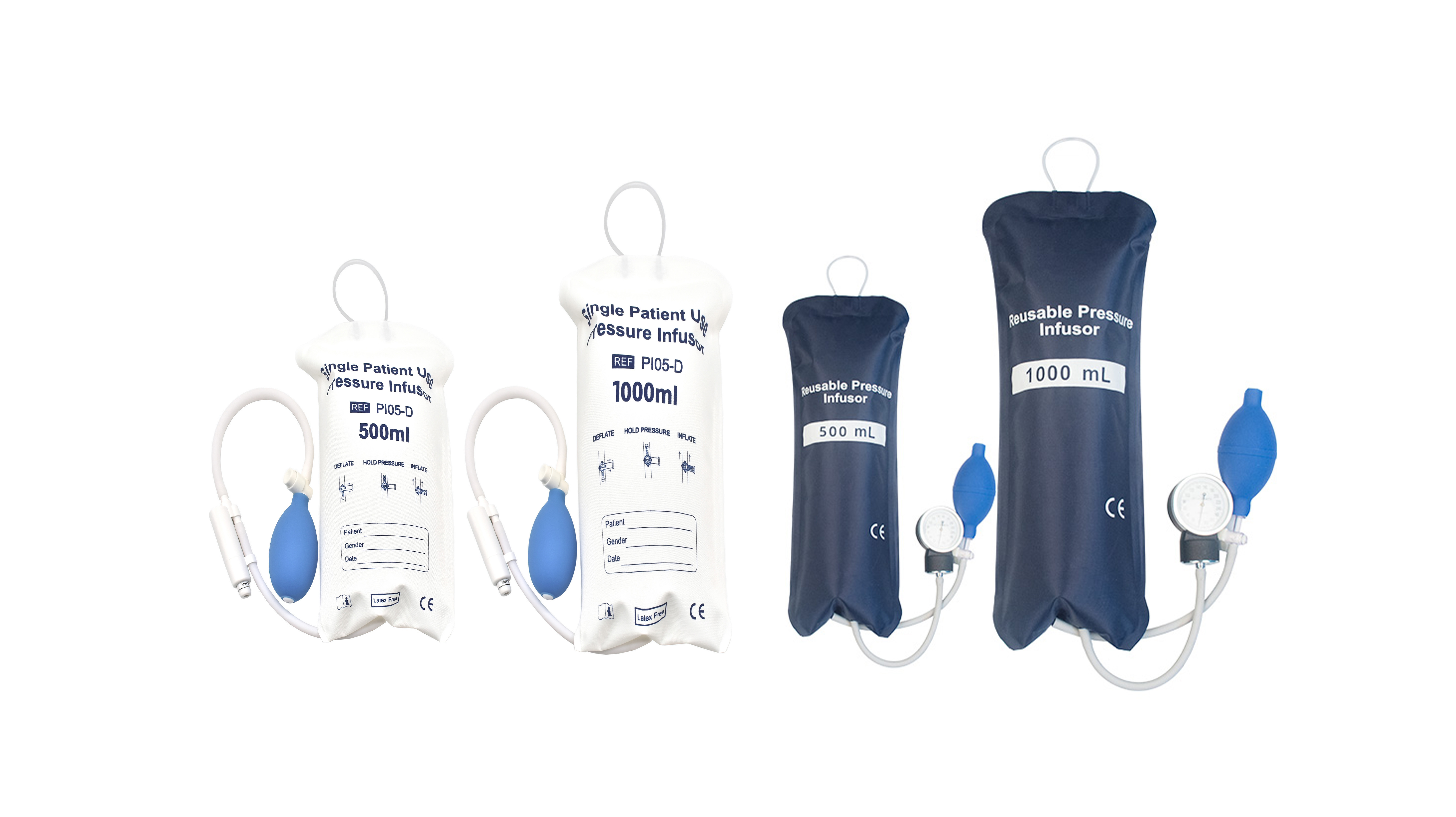
Understanding Pressure Infusion Bags and Their Clinical Role
Definition and Function of Pressure Infusion Bags in Medical Settings
Pressure infusion bags work as medical tools designed to speed up IV fluid delivery through the application of regulated outside pressure on regular IV bags. These devices typically include parts like an inflatable strap, some kind of pressure indicator, and a safety release mechanism. According to recent research from the Journal of Emergency Medicine published last year, this setup can boost flow speeds by around ten times compared to what happens when fluids just drip down by gravity alone. When the IV bag gets compressed within a range of roughly 150 to 300 mmHg pressure, it allows for much quicker delivery of things like blood transfusions, important drugs, or emergency fluids. This becomes really important during situations where every second counts, such as when someone needs urgent treatment after an accident or during surgery where there's significant bleeding happening.
Common Clinical Applications of Pressure Infusion Devices
These devices are essential in three primary clinical settings:
- Emergency Medicine: Facilitate rapid blood transfusions for hemorrhagic shock, reducing mortality risk by 34% in traumatic injuries (American Heart Association 2023).
- Surgical Suites: Support hemodynamic stability through continuous vasopressor infusions during major procedures.
- Critical Care: Accelerate antibiotic delivery in sepsis management, achieving therapeutic serum levels 45 minutes faster than conventional infusion methods.
They are also widely used in military field hospitals and air medical transport, where reliable, rapid fluid administration is crucial under resource-limited conditions.
Key International Safety Standards for Pressure Infusion Bags
Medical pressure infusion bags must comply with internationally recognized safety standards to ensure patient safety and device reliability. These regulations govern design, material quality, and performance in clinical environments.
Overview of ISO 13485 and IEC 60601 in medical device safety
Two foundational standards guide the certification of pressure infusion bags:
- ISO 13485: Ensures robust quality management systems for consistent design and manufacturing; adopted by 82% of accredited medical device manufacturers in 2023.
- IEC 60601: Addresses electrical safety for medical equipment used in patient care settings.
Hospitals using ISO 13485-certified infusion devices reported a 47% reduction in fluid administration errors compared to non-certified alternatives (Johns Hopkins study, 2021).
Compliance with ISO 20074:2015 for pressurized fluid delivery systems
Specifically tailored for pressurized infusion systems, ISO 20074:2015 mandates:
- Maximum pressure thresholds of 250-300 mmHg for adult use
- Leakage rates below 2 mL/minute under sustained pressure
- Material integrity testing at 1.5-times rated capacity
Per Journal of Emergency Medicine (2022), ISO 20074-compliant devices maintained ±5% flow accuracy during trauma resuscitation, significantly outperforming non-compliant models (±15%).
Regulatory oversight by FDA and EU MDR for infusion device safety
In the U.S., the FDA requires:
- 510(k) clearance demonstrating substantial equivalence to predicate devices
- Post-market surveillance reporting within 15 days of adverse events
The EU Medical Device Regulation (MDR 2017/745) enforces stricter requirements, including:
- Clinical evaluation reports with real-world performance data
- Unique Device Identification (UDI) for full traceability
FDA enforcement actions related to infusion devices have increased by 38% since 2020, reflecting intensified scrutiny of pressure control mechanisms.
Critical Safety Mechanisms: Pressure Control and Over-Pressurization Prevention
Built-in pressure relief valves and burst-resistant materials
Today's pressure infusion bags come equipped with several built-in safety mechanisms that help avoid dangerous over-pressurization situations. Most models feature pressure relief valves which kick in around the 300 mmHg mark to let off any excess buildup. At the same time, manufacturers have started using polymer materials that won't burst even when subjected to significant stress. This kind of engineering meets all the necessary medical device standards for pressure control, so healthcare professionals can safely deliver fluids quickly without worrying about equipment failure. Another important advancement is the dual-layer nylon construction that has become pretty much standard across the industry these days. This design stands up remarkably well to tearing forces, holding firm even when exposed to pressures three times what they normally encounter during regular operations.
Maximum pressure thresholds and fail-safe design principles
In fail-safe engineering, pressure limits are kept within a range of around 250 to 300 mmHg when dealing with adult patients. The automated shut-off mechanism kicks in once it reaches about 95% of whatever maximum level has been set, which gives an extra layer of safety just in case things start going wrong. Most modern systems actually have two forms of protection working together at the same time. There are electronic sensors monitoring everything constantly, but there's also a good old-fashioned mechanical lock built into the system too. If something happens to the main control unit, this backup ensures that fluid flow stops right away. Companies spend a lot of time testing their equipment under really harsh conditions during development. They simulate all sorts of problems that might occur in real life situations like total power failures or complete sensor breakdowns to make sure nothing goes wrong when it matters most.
Case study: Preventing vascular injury due to over-pressurization
The results from a 2023 study involving around 1,200 emergency blood transfusions showed something pretty remarkable. These new dual mechanism pressure infusion bags cut down on vascular injuries by about 82% when compared to older single valve versions. There was even a case where the system kicked in just under a second after spotting a blocked line, keeping pressures below the dangerous threshold of 290 mmHg even though the main control failed completely. Looking at what's happening in real-world settings now, doctors estimate these improved safety features probably stop roughly 3,700 unnecessary problems every year across American hospitals alone. That kind of difference makes all the difference for patients who need urgent care.
Sterility, Single-Use Design, and Infection Control
Importance of Sterile Packaging and Pyrogen-Free Materials
Keeping things sterile remains absolutely essential for pressure infusion systems. Recent checks found that equipment not meeting standards had contamination problems over 12% of the time. Single-use models come with proper sterile barriers that meet ISO 13485 requirements. They include packaging treated with gamma radiation and special plastics free from pyrogens. These components stop harmful endotoxins from getting through, something particularly important when blood products are being administered during surgery. After all, even small amounts of pyrogens can cause serious inflammation throughout the body.
Risks of Reprocessing Single-Use Pressure Infusion Bags
Reprocessing disposable infusion systems increases infection risk by up to 300%, as documented in CDC studies on reprocessed medical devices. Cost-driven reuse attempts often result in seal degradation (34% failure rate post-autoclaving) and pressure valve malfunctions. A 2022 case study linked reprocessed bags to 18 instances of catheter-related bloodstream infections.
Manufacturer Guidelines for Safe Usage and Disposal
Leading manufacturers require:
- Immediate disposal in biohazard containers after use
- Avoidance of chemical disinfectants that degrade polyurethane components
- Pre-use inspection for packaging breaches
EU MDR Article 17 further mandates traceability labeling to enforce single-use compliance. Recent single-use medical device market data shows 89% of hospitals now prefer pre-filled, sealed systems to minimize cross-contamination risks during emergencies.
Manufacturing Quality Control and Regulatory Compliance
Good Manufacturing Practices (GMP) in Production of Pressure Infusion Bags
In the world of medical device manufacturing, companies stick to Good Manufacturing Practices (GMP) when working inside those Class 100,000 cleanrooms where everything has to be spotless. They also make sure their sterilization methods have been properly validated before production starts. The latest data from the Medical Device Quality Report for 2024 shows something pretty impressive too. When manufacturers switched from manual inspections to automated optical systems, they saw a massive drop in particulate contamination down around 89%. That's a huge difference compared to what was happening before. Every single polymer material gets tested for biocompatibility as well. And when it comes to checking if seals hold up under pressure, manufacturers run burst pressure tests at over 300 mmHg. That's actually higher than what these devices typically experience during normal operation which ranges between 150 and 250 mmHg most of the time.
Traceability, Batch Testing, and Documentation Under ISO 13485
ISO 13485 requires full material traceability from raw materials to final product via unique batch codes. Key documentation includes:
| Requirement | ISO 13485 | FDA 21 CFR Part 820 |
|---|---|---|
| Batch Records Retention | 10+ years | Device Lifetime + 2 years |
| Sterilization Validation | Annual requalification | Every 3 years |
| Complaint Investigations | 30-day resolution window | 45-day resolution window |
Third-party audits confirm >99% accuracy in device history records—essential for effective post-market surveillance.
Third-Party Audits and CE Marking Requirements
CE marking under EU MDR requires annual notified body audits per Annex IX, focusing on:
- Risk management file verification for over-pressurization hazards
- Validation of accelerated aging studies (typically 5+ years shelf-life)
- Technician training records (minimum 40 hours of GMP instruction)
Devices must demonstrate <0.1% non-conformance rates across three consecutive production batches before market release.
FAQs About Pressure Infusion Bags
What is a pressure infusion bag?
A pressure infusion bag is a medical device used to accelerate the delivery of IV fluids by applying external pressure to standard IV bags.
How do pressure infusion bags prevent over-pressurization?
These bags include built-in safety mechanisms such as pressure relief valves and burst-resistant materials to prevent over-pressurization.
Why are single-use pressure infusion bags preferred?
Single-use bags reduce the risk of infection by ensuring sterility, eliminating contamination issues associated with reprocessing.
Table of Contents
- Understanding Pressure Infusion Bags and Their Clinical Role
- Key International Safety Standards for Pressure Infusion Bags
- Critical Safety Mechanisms: Pressure Control and Over-Pressurization Prevention
- Sterility, Single-Use Design, and Infection Control
- Manufacturing Quality Control and Regulatory Compliance
- FAQs About Pressure Infusion Bags