 EN
EN


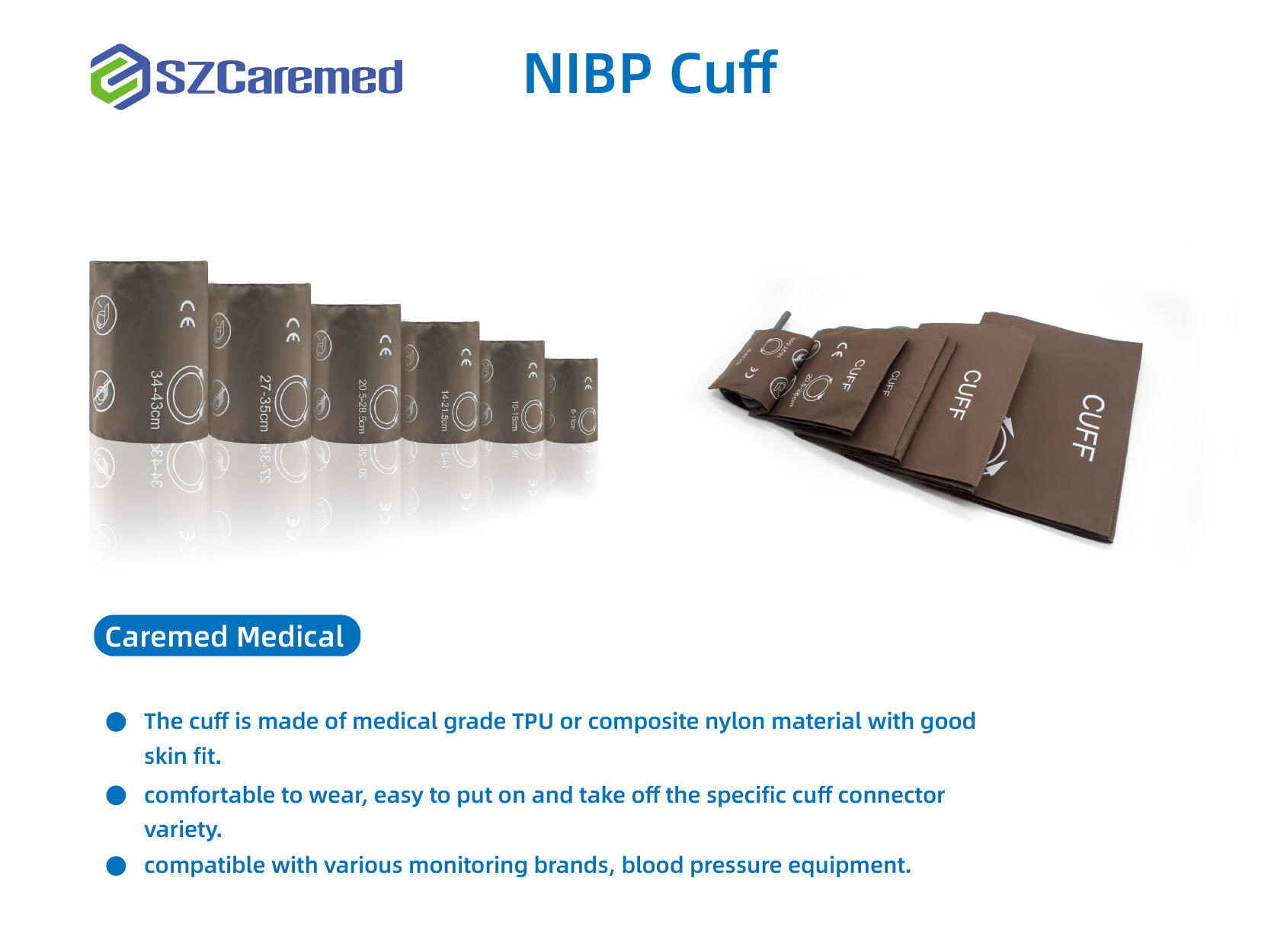
Essential NIBP Cuff Sizing for Measurement Accuracy
Clinical Consequences of Incorrect NIBP Cuff Sizing
It’s essential to use the correct NIBP cuff size to ensure accurate blood pressure readings, which play a crucial role in diagnosis and treatment decisions. Studies, including those from the American Heart Association, demonstrate how improper cuff sizing can result in misleading blood pressure estimations. For instance, a cuff that is too small may overestimate blood pressure, while a larger cuff might understate it. These errors can lead to serious clinical outcomes, such as misdiagnosed hypertension, a condition that affects treatment plans and patient health profoundly. Several case studies illustrate that incorrect cuff sizing can result in false positives or negatives, emphasizing the critical need for proper sizing in clinical practices.
Arm Circumference Guidelines for Optimal Fit
Accurately measuring the arm circumference is key to selecting the right NIBP cuff, ensuring that the correct size is applied for each patient. To achieve optimal fit, healthcare providers should follow standardized guidelines, as recommended by authoritative bodies like the American Heart Association. These guidelines advocate for specific cuff sizes corresponding to measured arm ranges, ensuring diagnostic precision. Variations among adult, pediatric, and obese populations necessitate customized cuff fittings to accommodate diverse body types and improve blood pressure measurement accuracy. Visual aids displaying these size recommendations can further enhance comprehension and implementation in clinical settings.
Impact on Hypertension Diagnosis and Treatment
Inadequate NIBP cuff sizing can lead to misinterpretation of a patient's hypertension status, causing inappropriate treatment paths. Statistics from healthcare studies highlight the prevalence of misdiagnosis caused by such errors, supported by data from organizations like the American Heart Association. These inaccuracies can lead to harmful consequences, including over-treatment or under-treatment, which adversely affect patient health outcomes. Therefore, it is crucial for healthcare providers to ensure accurate cuff sizes are employed to prevent such diagnostic mistakes and facilitate correct hypertension management. This not only improves patient care but also enhances clinical decision-making processes in treating hypertension effectively.
Critical Material and Design Features of Medical-Grade Cuffs
Durability Standards for Reusable Non Invasive Blood Pressure Cuffs
Durability is a paramount feature of reusable non-invasive blood pressure (NIBP) cuffs, as they must withstand frequent use without compromising function. These cuffs are engineered with materials such as nylon and polyester, known for their ability to endure repeated applications and maintain integrity. Certification from industry standards, like those set by the FDA, ensures that the materials used are safe and reliable for patient use. The expected lifespan of these cuffs can vary, but choosing durable materials contributes to their efficiency over long-term monitoring, ensuring that both patient safety and measurement accuracy are maintained.
Monitor Compatibility Across Healthcare Settings
Ensuring that NIBP cuffs are universally compatible across various healthcare settings is essential for seamless patient monitoring. Many cuffs are designed with standardized connector types to fit a wide range of monitors found in hospitals and clinics. Healthcare professionals should look for features such as versatile cuff sizes and adaptable connectors, which promote interoperability between different devices. Expert guidelines advocate for selecting cuffs based on their compatibility with existing equipment to enhance monitoring precision and reduce issues related to connectivity, ensuring a smooth operation in diverse medical environments.
Bladder Dimensions and Pressure Distribution Mechanics
The design of the bladder inside an NIBP cuff critically influences pressure distribution and, subsequently, measurement accuracy. Bladder dimensions are crucial in ensuring the pressure is evenly applied across the arm, which not only improves measurement accuracy but also ensures patient comfort. Optimal bladder dimensions have been identified in clinical studies to vary by demographic, necessitating a tailored approach to cuff selection based on patient profiles. This tailored approach underscores the importance of choosing the right cuff for accurate and comfortable blood pressure measurement.
Proper Application Techniques for Optimal Readings
Positioning Over Brachial Artery: Step-by-Step Protocol
Proper positioning of the cuff over the brachial artery is vital to ensure accurate blood pressure readings. Here's a detailed protocol to achieve this:
- Identify the Brachial Artery: Palpate the arm to locate the brachial artery, typically found at the elbow's inner bend.
- Align the Cuff: Place the cuff's lower edge about an inch above the elbow crease, ensuring the artery marker aligns with the brachial artery.
- Wrap the Cuff Securely: Wrap the cuff smoothly and snugly around the upper arm, ensuring it fits firmly but does not constrict the arm's natural shape.
Applying the cuff correctly is essential to minimize errors. Training healthcare staff on this protocol ensures consistency in measurements, aligning with best practices as recognized by medical standards. For visual learners, diagrams highlighting correct and incorrect placements can significantly aid training efforts.
Heart Level Alignment During Blood Pressure Monitoring
Aligning the cuff at heart level during measurement is critical for accuracy. This position prevents gravitational influences on blood pressure readings, as verified by clinical studies. When the arm is positioned below or above heart level, readings can vary due to hydrostatic pressure changes, potentially skewing results.
To verify arm alignment, healthcare providers can use the following methods:
- Use of a Level Surface: Position the patient so that their upper arm rests on a surface level with the heart.
- Adjustable Arm Supports: Employ adjustable arm supports to maintain the correct position during measurement, promoting consistency across clinical practices.
These practices help maintain reliability in blood pressure monitoring, enhancing diagnostic accuracy and patient outcomes.
Tension Control to Avoid Over-Tightening
Appropriate tension control is crucial in preventing artifacts in blood pressure readings. Over-tightening a non-invasive blood pressure cuff can lead to discomfort and inaccurate measurements. To ensure optimal tension, healthcare providers should check the cuff's fit:
- Two-Finger Test: Ensure two fingers can comfortably slide under the cuff after it is secured.
- Visual Indicators: Use markings or guide indicators on the cuff to judge appropriate tightness.
Studies indicate that excessive tightness can alter blood flow and pressure readings, as confirmed by expert recommendations. Setting proper tension not only improves patient comfort but also enhances the reliability of blood pressure measurements, which is vital for effective cardiovascular monitoring.
Integration Capabilities in Patient Monitoring Systems
Synchronization with SpO2 Sensors and EKG Cables
Integrating NIBP cuffs with SpO2 sensors and EKG cables can significantly enhance the comprehensiveness of patient assessments. This synchronization allows healthcare providers to gather a broader spectrum of vital signs, facilitating more detailed evaluations and timely interventions. The technology behind these integrations leverages advanced algorithms to ensure simultaneous, accurate readings, thereby improving patient monitoring accuracy. For example, a study from the Journal of Clinical Monitoring and Computing found that integrated systems can reduce readmission rates by nearly 20%, highlighting the benefits of this synergy.
By combining diverse data streams, healthcare facilities can implement a holistic approach to patient care, optimizing clinical responses and outcomes. Such integrations prove invaluable in managing complex and critical conditions, reinforcing the need for widespread implementation across medical settings.
AAMI/ISO Compliance and Validation Protocols
Adhering to AAMI and ISO standards is imperative in the design and application of NIBP cuffs, ensuring patient safety and data reliability. These standards provide comprehensive guidelines on best practices for development and quality assurance, offering a framework to maintain high safety and performance benchmarks. Compliance is critical as it assures healthcare providers and patients of the device's efficacy in delivering accurate readings.
Validation protocols are established to test devices against these standards, assessing factors such as accuracy, safety, and durability. For instance, frequent calibration and testing procedures are recommended to uphold consistency, enabling the device to meet stringent regulatory requirements. The commitment to such validation not only supports robust healthcare practices but also fosters patient trust in medical technology.