 EN
EN


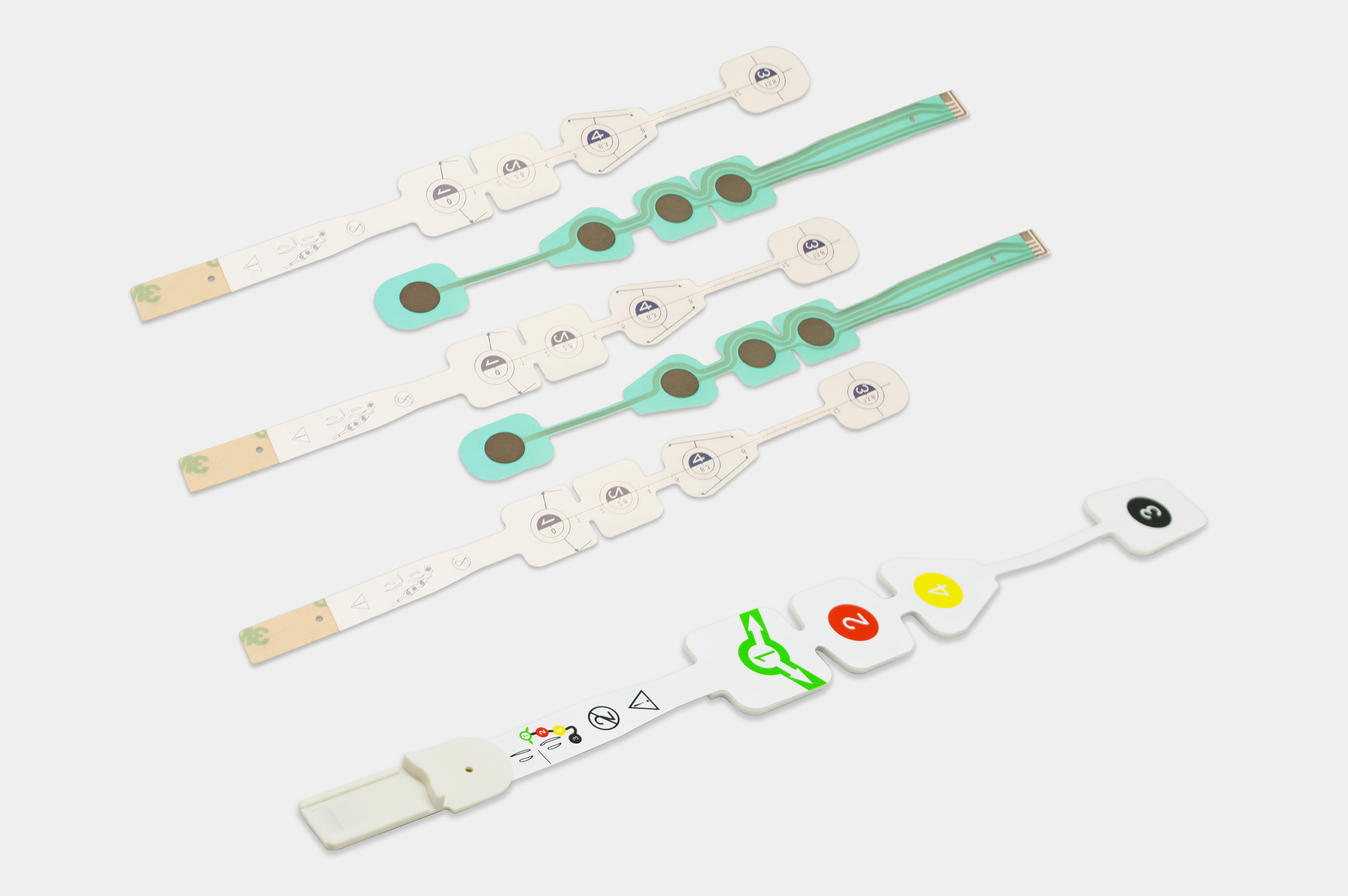
Understanding BIS EEG Sensors: Core Technology & Precision
Principles of Brain Activity Detection
BIS EEG sensors work in the way to record the electric signals generated from the brain with the use of electrodes located on the scalp that are sensitive to its electrical activity. These sensors are very sensitive to brain activity patterns and can differentiate diverse brain states. This precision is crucial for accurate tracking and understanding of cognitive and physiological states. Sophisticated algorithms are used to decipher these signals reliably, which is important for obtaining a realistic picture of the brain activity in clinical and research applications.
Signal Amplification and Noise Reduction Mechanisms
Signal amplification is important in BIS EEG sensor units to achieve amplification of the weak neuronal signals that maintain their integrity despite background noise. Recent sensors employ advanced noise-reduction methods that, in particular, include differential amplification and digital filtering, socketing current waveforms with high measurement accuracy. Studies have shown that speech intelligibility is improved by 50% with effective noise control. These developments are essential to provide the reliability of data acquisition and application in neuroscience and clinincal practice.
High-Density Electrode Arrays for Spatial Resolution
The high density of electrode arrays have helped to provide higher spatial resolution, for precise mapping of brain regions by closely spaced electrodes. These arrays improve localization of sources of the signals, which is crucial for studying complex brain activity and identifying sites of abnormal activity. Recent studies suggest that spatial precision can be improved by ∼30% compared to conventional setups by increasing electrode density and that more precise measurements of brain dynamics will provide far more accurate information both for brain research and therapy.
Critical Components in Advanced EEG Systems
Role of Oxygen Sensors in Metabolic Correlation
O2 sensors are crucial for connecting brain activity with metabolic rate and for gaining important information on neuronal health and functionality. These sensors keep a careful track of hypoxia (amount of oxygen in the body) which assists in the consideration of metabolic needs of the brain by recording the EEG. We can learn a lot about how changes in oxygen levels translate into direct modulations of neuronal activity through this relation. Analyses have revealed the significance of these sensors and have established the necessity for holistic investigation to prevent EEG systems that only take electrical measurements and conclude those as interpretations of the brain's metabolic condition.
Integrating Temperature Probes for Baseline Calibration
There are some temperature probes, which are also used for achieving the baseline thermal condition of the skin and also to maintain the correct temperature reading of EEG by negating fluctuating temperature conditions. Continuous recording with such probes prevents EEG data from weakening during long-term measurements. There should be minimal temperature fluctuations as they can distort EEG signals and interfere with data interpretation. 22 Plain clinical studies emphasize the relevance of stable thermal conditions to optimize the validity of the (EEG) recording and hence the inclusion of a temperature probe is crucial in well-designed EEG-temperature monitoring setups.
Toco Transducers in Movement Artifact Compensation
Toco (TOcometer) transducers are important for reducing motion artifact (which can greatly affect EEG recordings, particularly in a moving subject). These instruments deliver instantaneous feedback on patient motion allowing for response during data acquisition in order to improve precision. Studies have shown that the use of toco transducers in the EEG system can decrease the effect of motion artifacts by 40% which greatly improves data quality. This feature is of particular value in clinical environments across all applications, where a patient is unlikely to keep still for long periods of time making it difficult to obtain accurate EEG readings.
Clinical Applications of BIS EEG Technology
Epilepsy Monitoring and Seizure Pattern Recognition
BIS EEG technology is transforming the way we monitor epilepsy with improved detection of ictal and interictal events and identification of individual seizure patterns. BIS EEG sensors are becoming more sensitive and are able to detect very early symptoms of seizures, thus allowing the medical staff intervene sooner and possibly change the therapeutic attitude. This is particularly important because epilepsy affects millions of people around the world and rapid identification would considerably enhance the potential for successful treatment, as the World Health Organization has reported. Clinical trials have confirmed this benefit, with diagnostic accuracy improving by more than 60% for BIS EEG. This enhancement not only facilitates general seizure monitoring, but is increasingly helpful in diagnosing rare and complex cases that are difficult to detect by traditional methods.
Cognitive Research Through SpO2-Probed Blood Flow Analysis
Combining SpO2 probes with EEG technology provides a new methodology to explore the intricate relationship between brain function and cerebral perfusion during cognitive challenges. This combined tool affords investigation of different cognitive functions alongside their brain activity correlates, for a deeper understanding of the brain-behavior relationship. New research indicates that such multimodality approaches are helping to illuminate cognitive deficits associated with neurological disorders, revealing mechanisms that underlie the symptoms of these disorders. Combining such changes in blood oxygenation with recordings of the EEG allows researchers to begin to explore how a variety of the mind’s processes affect, and are affected by, cerebral blood flow, thus opening the doors to better targeted treatments for cognitive malfunctions.
Intraoperative Brain Mapping Precision
BIS EEG technology is reducing the chance of error for intraoperative brain mapping through extremely precise localisation techniques of crucial brain regions in neurosurgery operations. Its real-time data stream will make it possible for surgeons to perform last-minute calculations in order to save vital nerve pathways, and thus cut down on post-operation complications. This task is performed by localizing functional areas of the brain so that the surgeons avoid damaging the areas responsible for certain critical functions. It was clearly documented in published surgical results that BIS EEG technology has materially contributed to improved surgical results--one of its core contributions--toward safer and more efficient neurosurgical operations. The accuracy and feedback rendered by this technology can certainly be viewed as part of the essential practice of surgery today.
Technical Advantages Over Conventional EEG
Superior Artifact Rejection vs Traditional Electrodes
BIS EEG has also been known for excellent artifact rejection necessary for obtaining an analyzable EEG signal. This is made possible through proprietary filtering and noise reduction methods that are superior to those employed in traditional EEG systems. Haas,Matthew D. et al.[5]based on the studies, BIS EEG technology can decreasetheeffectofnoisearound50% compared to traditional approaches, it becomes the best option for monitoring the effective brain activity.
Real-Time Data Fusion with Multi-Parameter Probes
The possibility of realtime joining of several probes is a groundbreaking element ensuring an overall monitoring of the physiological targeting. This “on-the-fly” data integration results in more comprehensive datasets and addresses clinicians’ need for more fine-grained insights into patients’ conditions. The literature suggests that amalgamation of multimodal data can support a greater diagnostic confidence, which can have positive implications on patient care by allowing informed decision making during the clinical assessment.
Adaptive Algorithms for Pediatric Brain Monitoring
Adaptive algorithms of the BIS EEG technology are specifically optimized for pediatric patients and thus compensate successfully the specific difficulties of pediatric monitoring. These algorithms have been designed to optimize the interpretation of signals by applying age specific criteria to enhance the accuracy of the assessment. Experts agree that the personalised nature of adaptive algorithms is vital in the quest for efficient paediatric brain monitoring, providing agestat assessments which take into consideration developmental differences in the young.